

Introduction to the different conflict handling style
When there are conflicts, there are ways to dissolve the conflict. The five major types of conflict management styles are avoiding/withdrawing, accommodating, collaborating, competing and compromising.
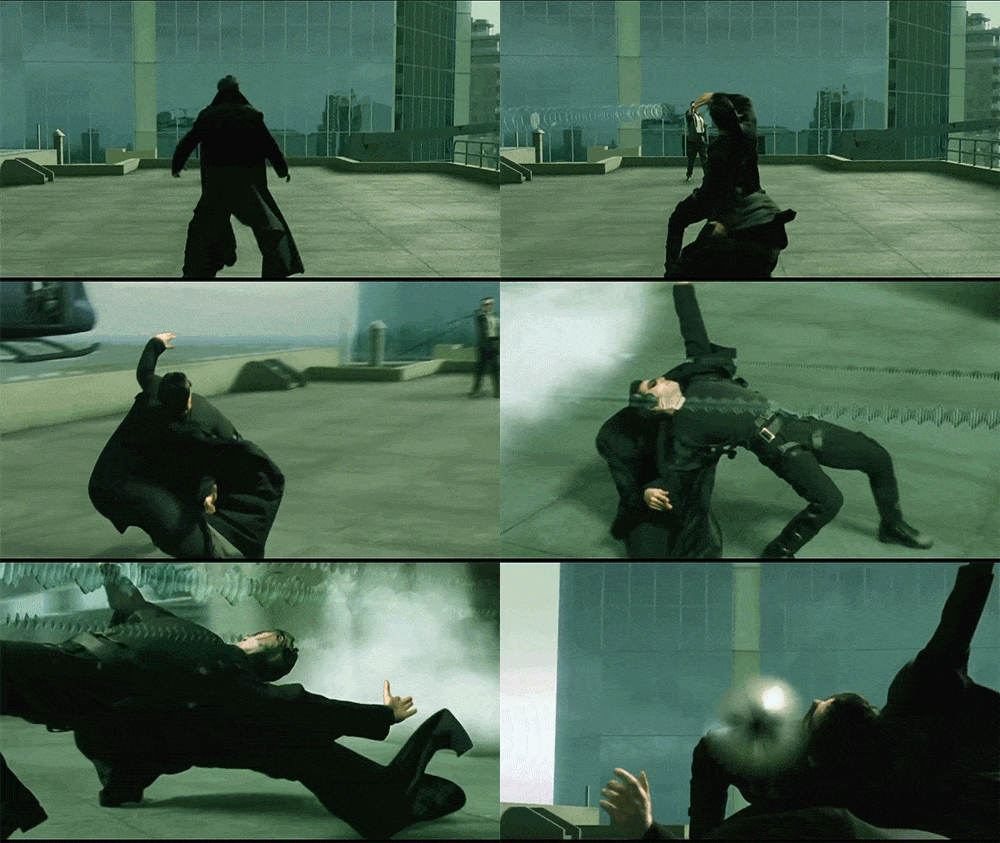
For avoiding/withdrawing style, the person will tend retract their point of view and not pursue their beliefs. They would either continuously postpone or completely dodge the conflict whenever it arises. This will in turn cause a lose-lose situation as both party will not be able to find a proper solution to the problem.
Image Source

Accommodating style is where one party will forsakes their own needs or desire in exchange for others. They will give in to the conflict and cause themselves to be in a disadvantage situation. This will result in a win-lose situation.Accommodating style is where one party will forsakes their own needs or desire in exchange for others. They will give in to the conflict and cause themselves to be in a disadvantage situation. This will result in a win-lose situation.
Image Source

As for collaborating style, both party in the conflict will try to find a solution where it will meet the needs of all parties. As having two parties of different background working together to find a satisfactory solution, it may take up a considerable amount of time for them to resolve the conflict. With skills and time, this style will result in a win-win situation.
Image Source

However the competing style is when one of the party tries to gain the most advantage of the opposite party. They will take a firm stance and negotiate to maximize its result ignoring the other party’s perspectives. This style is useful if you have to stand up for your rights or to prevent a terrible decision from being made. Therefore this conflict management style will likely end in a win-lose situation.
Image Source

Lastly for compromising style, there will be an attempt to find a way to please all parties in the conflict. People will have to find a middle ground where all needs are met. This will led to people being satisfied or unsatisfied to a certain extend. Therefore the result of this style can either be win-lose or lose-win or win-win depending on the situation.
Image Source
The Scenario
Robert, a director and union member, has requested an 8 percent raise for his work unit. His request is based on recent finance reports showing that his department has substantially contributed to a 15 percent profit increase for the organisation. He feels that his team should be compensated for the hard work and long hours they have put in over the last few years to achieve this outcome. Kay knows the value of Robert’s team and readily acknowledges their achievements. However, she knows that the company has plans to expand and diversify. This new project will use up the majority of the profit increase for at least the next five years. She is willing to sit down with Robert and talk about how his team can get involved in the new project. There could be new job opportunities, some overseas assignments, and possible promotions to various leadership positions within the new project. Kay has flagged this with Robert; however, he is adamant that his team needs to be compensated with a monetary increase. He went as far as threatening to get the union involved if his request is unsuccessful.
Identify one of the conflict handling style used in this scenario

After analyzing the scenario given, I have identified the competing style as one of the conflict management style used. From the scenario, despite Kay mentioning to Robert on how they could involve Robert’s team on the new project where there are attractive incentives. Robert is still adamant that his team needs to be compensated with a monetary increase. Robert also mentioned that he would get the union involved. This shows that Robert is taking a firm stance and unwilling to back down on this situation. Robert is using this conflict management style to stand for his rights.
Bargaining Approach by Robert

From the given scenario, we can tell that the bargaining approach used by Robert is the distributive approach. As Robert is adamant that his team needs to be compensated with monetary increase, this shows that he is trying to gain the maximum value for themselves. With Robert being unwilling to back down from his demands, it will lead to a win-lose situation. Therefore, Robert is using the distributive bargaining approach.
What aspect of interpersonal communication is contributing to the poor working environment?
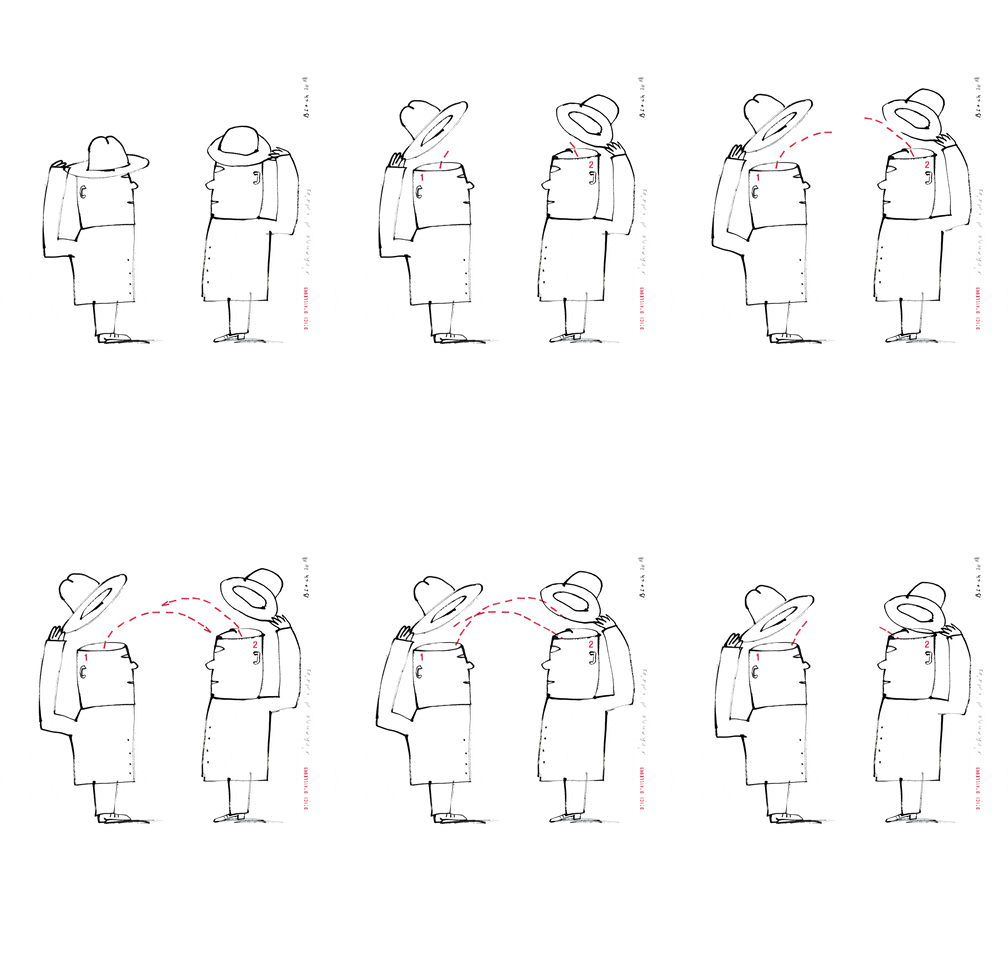
In the non-verbal aspect of interpersonal communication, listening is one of the most important element. By listening to the opposing party, we will be able to determine the best way to resolve the problem being faced. It also helps us to build a better relationship with one another and also lead to compromising or collaboration in negotiation. In this case, Robert lacks in listening skill as he refuses to listen to Kay’s suggestion. On the other hand, Kay did listen to Robert as she acknowledges the hard work being put in by him and his team. She provided Robert with a suggestion that comes with attractive incentives but she did not compromise to meet Robert’s demand.
Hall’s context model

Using the Hall’s context model, it can be derived that Robert is a low context person. The way he conveyed his demands to Kay are simple and clear. From the way he talk to Kay, it can be seen that Robert thinks that product is more important than the process. He wants his demands being met without thinking of a process where he can get his demands without having anyone lose out in the negotiation.
Conclusion
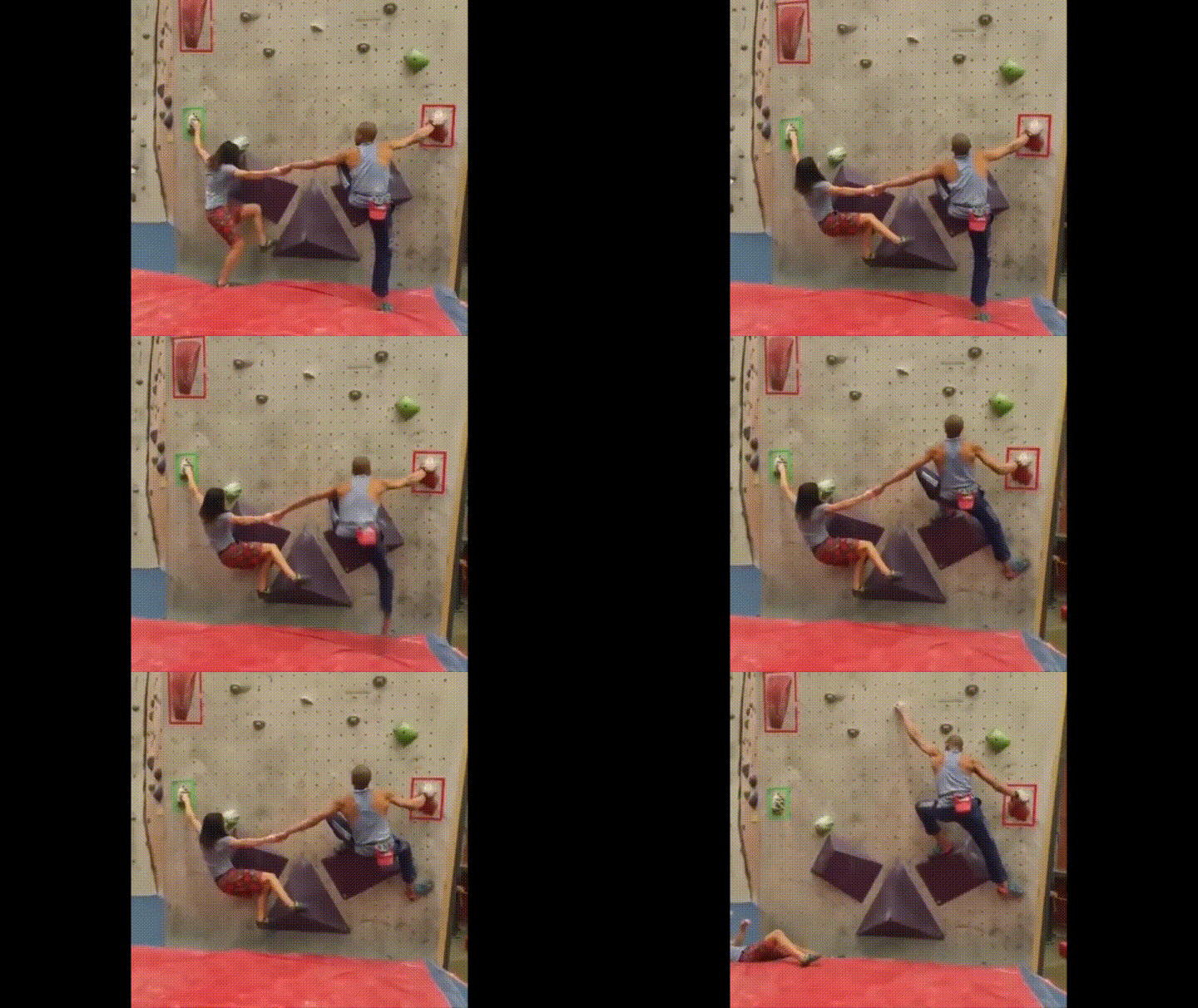
Image Source
In conclusion, Robert should have back down and discuss what Kay have suggested to him with his team to find out what everyone truly wants. Both Kay and Robert should have discuss and try to collaborate with each other. By collaborating, they will be able to achieve a win-win situation which results in both party getting what they want. Therefore, this case study have taught us how important it is to listen to the demands of the other party and try to collaborate with each other. Although it can be a long process, it will eventually lead to a pleasant result for everyone. Thanks for reading. Peace 🙂
References
Amaresan, S. (2020). 5 Conflict Management Styles for Every Personality Type. [online] Blog.hubspot.com. Available at: https://blog.hubspot.com/service/conflict-management-styles [Accessed 2 Feb. 2020].
 The Low Quality Blog
5 replies on “Case Study Analysis”
Hey Liang Qi,
Your blog have managed to analysis the case study properly and managed to analyse each person’s communication skills and bargaining approach. I agree that competing style as Robert has only focused on his need and did not cared about other needs. While Robert refuse to be flexible, Kay is trying to communicate with Robert. Therefore, I agree with our analysis on the bargaining approach on Robert being distributive approach and Robert being a low context person. I also liked your point that listening is very important in communication as communication only works if both parties listens to each other. Overall, I like your blog and keep up the great work!
LikeLike
Hi Liang Qi, great post on your views on the case study. With clear explanation, you explain about all the different types of conflict handling styles, allowing me to understand the difference between all the styles. It is clear that Robert is identified for using competing style, as all Robert wants is to get what he demands and not going to listen or discuss with Kay. To further elaborate, Robert is using distributive approach, which shows that Robert only wants to gain for himself and his team, and doesn’t want any negotiation, unless is within what he demanded. Using Hall’s model as evidence, I too believe that Robert is a low-context culture person, as his demands are clear and straight to the point, and doesn’t have any rooms for discussions or negotiations. Great post!
LikeLike
Hi Liang Qi, great post on your views and perspective on the case study.With a clear elaboration of the different types of conflict handling styles allows me to further understand the difference between all of them.Further more the little images or GIF are very appropriate and it makes me more engage with your blog! I do agree with you that Robert is been competing in conflict handling style and using distributive approach to keep his own interest and is unmoved by whatever the other party wanted to offer.Anyway,continue keeping up the good work,Looking forward to your next blog!
LikeLike
Hi Liang Qi, nice post on the analysis of this case study. It was good that you put down the different conflict handling style for the readers. I too agree that Robert is using the conflict handling style when discussing with Kay as he was trying to vie for resources that the company may not be able to provide. Same too for the Hall’s context model, i agree that Robert belongs to the low context category as his behavior has multiple elements befitting in it. Finally, good idea of adding in an alternative solution in your conclusion that the two parties should have talked it out to minimize the conflict. Overall, great post on the case study! Thanks for the read and keep up the great work! Oh, and by the way, nice touch on adding some pictures to spice up the post. 🙂
LikeLike
Hi Liang Qi , i think with post you have capture the essence of the topic and you did a great job in explaining it to the audience. The picture and gif and break down of each type of conflict handling style also contribute to my understanding thank you. The way that you apply Hall Context to the character Robert is spot as you also provide why and what led you to classify Robert as such. It was a joy to read your post on this topic. With what Robert has display in the scenario i too have to agree with you on your inference of him
LikeLike